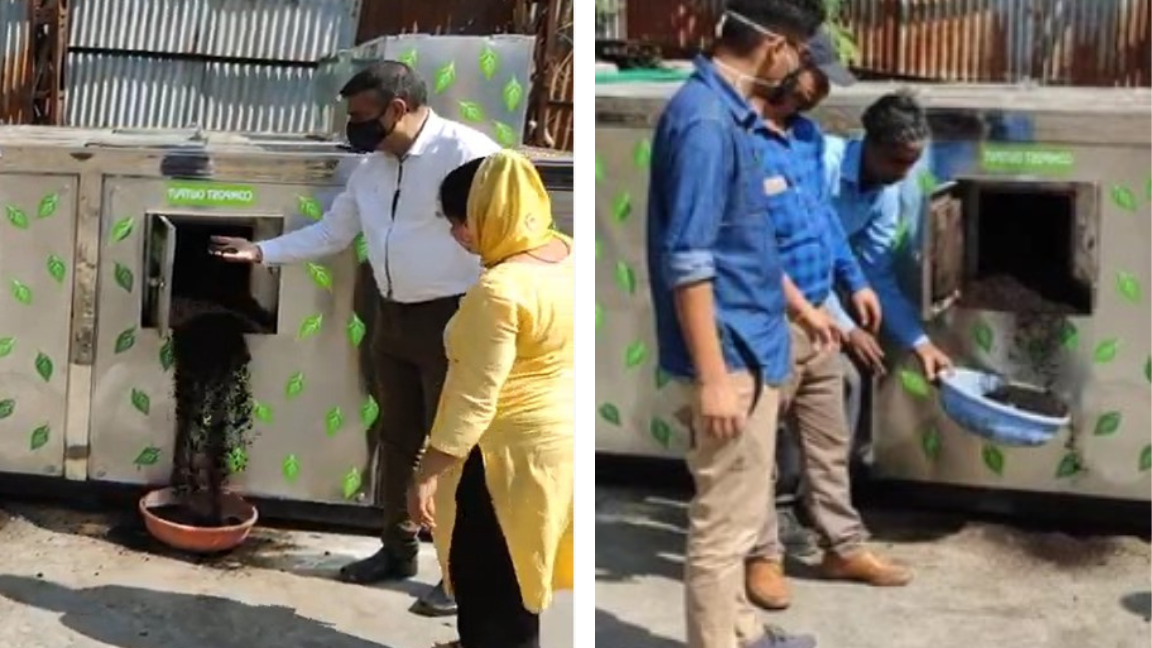
Given the overwhelming scientific evidence highlighting the harmful effects of the so-called 24-hour ‘composters,’ some discerning volunteers in apartment complexes have successfully prevented these machines from being installed or have educated their communities about the dangers of using those already installed by their builders. Unfortunately, those who fail to research thoroughly and are swayed by the slick marketing tactics of the machine-makers continue to fall prey to this menace. This isn’t a new problem.
New Misconception
What’s certainly new is the misconception that the residue produced by these machines, which often resembles compost, can be used as a carbon/browns source—dry leaves or cocopeat, or both—to carry out traditional composting.
That’s not correct! While it may look similar, this residue lacks the necessary organic carbon content and structure that materials like dry leaves and cocopeat provide. Using it can disrupt the composting process and cause air, water, and soil pollution.
Burning vs. Composting
It’s crucial to distinguish between burning and composting. Composting is a biological process where microorganisms break down organic material, transforming kitchen scraps and garden waste into nutrient-rich compost. In contrast, burning is a chemical process involving the oxidation of materials at high temperatures, which simply destroys organic matter.
As discussed in previous articles, segregation is often neglected in communities using these machines. This means that not only kitchen waste and garden rejects but also plastic and other non-biodegradable materials are frequently included in the mix and the machine is turned on.
The Hidden Dangers of Residue Misuse
In such a situation, what are the harms caused by using this residue instead of proper carbon/brown content like dry leaves or cocopeat, or sometimes both? While doing my research on this topic, I came across an exhaustive list of harmful chemical compounds and anomalies caused or left behind by this residue. I have picked the most important ones here:
- No Organic Matter Present: Burning destroys the organic matter which is needed for the microbes to feed on and multiply.
- Extremely Toxic Residue: When mixed waste is burned at low temperatures like 150-250°C, which is usually the case here, incomplete combustion occurs. This can form toxic chemical compounds mainly dioxins and furans, carbon monoxide, volatile organic compounds, hydrogen chloride, among others. This process can also release heavy metals from the waste thrown into these machines.
- Nutrient Deficiency: When we use dry leaves or cocopeat as carbon for composting, they contain high amounts of nutrients necessary to provide energy for the microbes. But this residue lacks all of that.
- When I contacted Dr. C N Manoj to throw light on this matter, he said: “Apart from toxic elements, another harmful substance that gets released during low-temperature burning is phenolic compounds. These phenolics are dangerous as they inhibit the growth and activity of beneficial microorganisms present in the soil and contaminate it when the ‘compost’ made from using this residue is applied to the soil.”
My question is if phenolics and other toxins can affect the growth of the soil microbes, won’t they be equally harmful to the microbes present in the food waste which are needed to break down the same?
We all can very well choose to ignore this new misconception. But we certainly cannot avoid the consequences: air, water and soil pollution. Hence, please spread the word.
Sources:
1. https://www.compostfoundation.org/
2. https://www.epa.gov/sustainable-management-food/composting
3. https://www.sierraclub.org/sierra/2015-3-may-june/ask-mr-green/hey-mr-green-it-better-burn-brush-or-let-it-decompose

 ENDLESSLY GREEN