
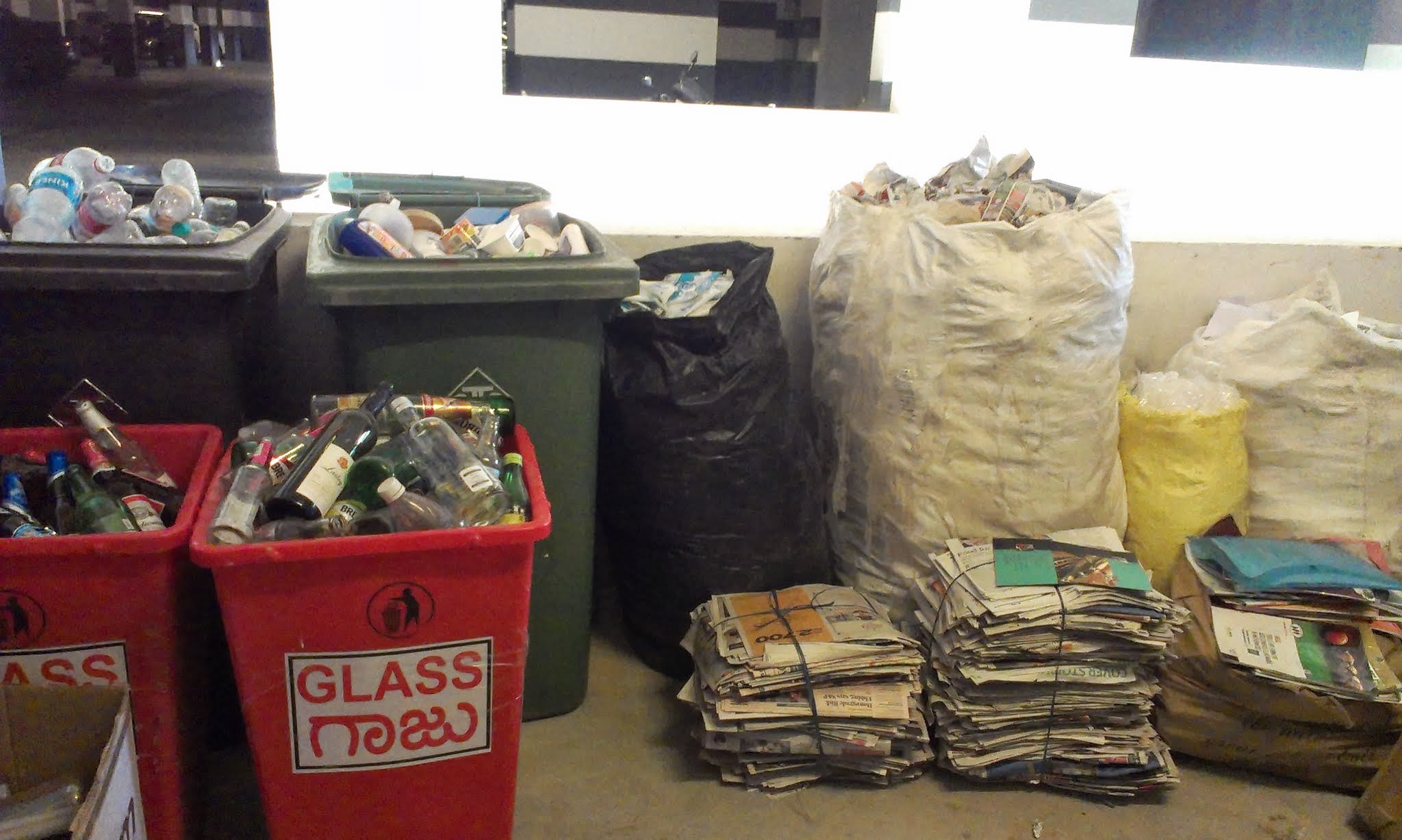
“Hunger is the trigger to eat. Thirst is the trigger to drink water. What is the trigger for me to segregate waste?”
This question on waste segregation popped up from an audience while I was at A V Rama Rao Auditorium, Indian Institute of Science Campus, Bengaluru, on January 30. I was moderating the inaugural session of “The Science of Sustainable Urban Living” conceived and executed by Bangalore Apartment Federation, Bengaluru Science and Technology (BeST) Cluster—an initiative by the Office of the Principal Scientific Adviser to the Government of India, Science and Technology Cluster.
One of the panelists answered the question reminding of the need to be responsible for future generations. No surprises there.
Yet, it got me thinking. Those who segregate have their reasons and rationale. Those who don’t, also have their own. So, why not step into their shoes for once and extract the truth?
1. It’s suspiciously simple
Segregation is simple. Suspiciously so. Three bins. Very rarely more. Can this level of simplicity solve a mountain of a crisis? This is deeply deceptive and clearly not meant for people who enjoy complex explanations to simple problems, circular debates around straight-forward solutions, and grand declarations about “systemic failure”.
2. Who can afford dangerous self-awareness?
If you segregate sincerely, possibilities of you beginning to unravel what you consume, how much you throw away, and what never really disappears are very high. You’ll notice packaging entering your home daily, food being wasted regularly, junk arriving wrapped and branded only to be quickly discarded. This kind of awareness is simply dangerous. It interferes with your right to live in denial. How can one sacrifice this which is essential for modern living? It will kill your joy of online shopping, impulse buying, bulk discount offers. Why risk that?
3. No rewards, no applause
Worst of all, segregation means going at it consistently—every single day. Nobody is looking at you while you do it, yet the task demands daily attention. No one gives you an award, not even an applause. No one is standing there to click before-and-after photographs worthy of sharing on social media. In short, no rewards. Just the quiet, unremarkable act of doing what needs to be done.
4. Responsibility might land in your kitchen
If segregation becomes your muscle memory, you are certain to discover that the waste collector is not the villain, the municipality is not a black hole—I mean not always! Plus, the system isn’t entirely abstract either. Some responsibility may accidentally land in your kitchen. You’d rather avoid it than confront it every single day and get back to cooking.
5. Your guests will judge you
Maintaining three bins at home will force you to become that person who takes a moment before throwing: “Is this wet or dry?” The guests at home may roll their eyes. Ignoring everyone around and sticking to your business may not remain an option forever.
6. Your best excuse will disappear
You’ll not be able to say, as you have done with full confidence: “Why should I segregate my waste? Everything gets mixed anyway.” Because sometimes it doesn’t. And once that oft-used excuse vanishes, then what will you be left with?
So, please don’t segregate your waste. If nothing else, it will interfere with your long-held belief that nothing you do matters in this country.
Worse, it may even suggest that sometimes, it takes small acts of everyday compliance to sustain even broken systems. You don’t want to live with that realisation.
(Pic: SH)

 ENDLESSLY GREEN